Why Online Leads Ghost You (and How Referrals Fix That)

James
Author
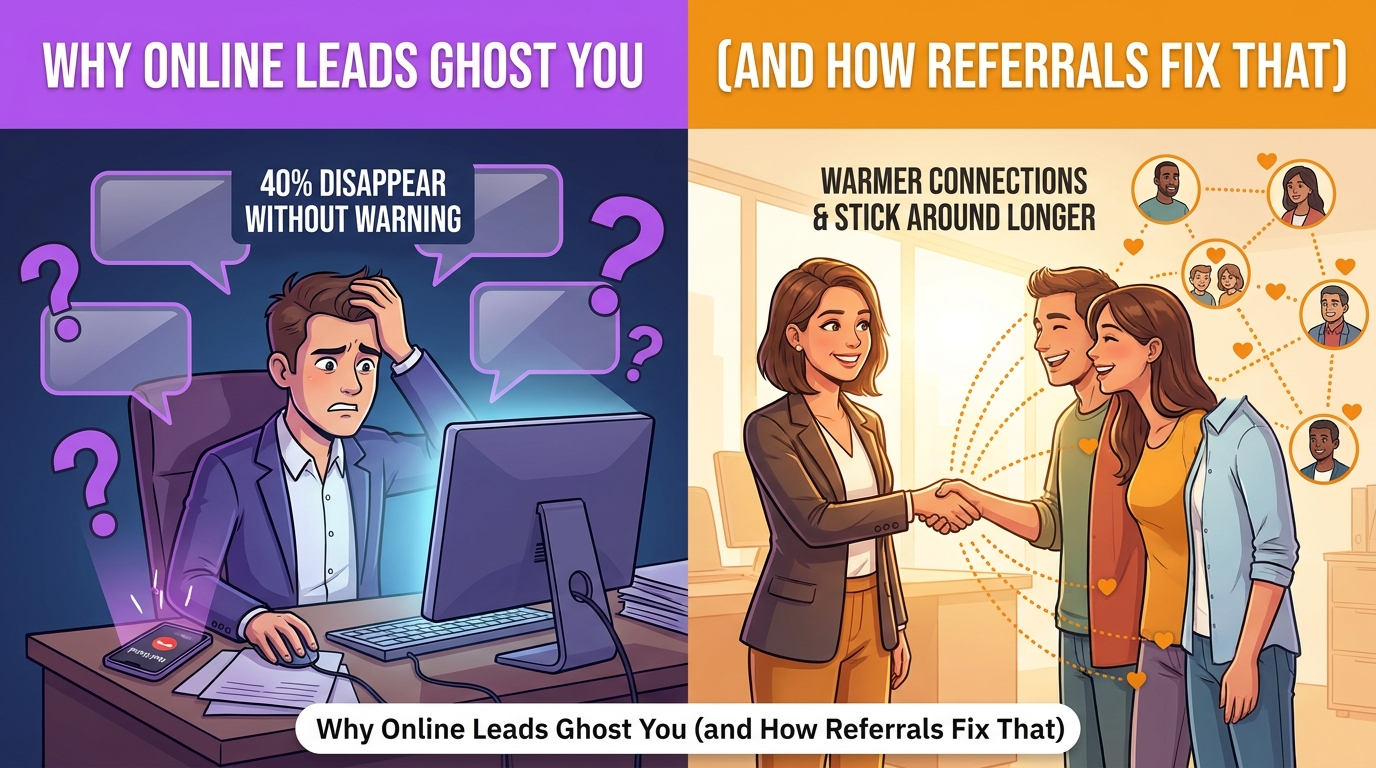
I've been there. You're sitting at your desk, refreshing your CRM every five minutes, wondering where that promising lead from last week disappeared t...
I've been there. You're sitting at your desk, refreshing your CRM every five minutes, wondering where that promising lead from last week disappeared to. They seemed so interested during your initial conversation, maybe even asked about specific properties or neighborhoods. Then... nothing. Radio silence. Complete ghost mode.
If this sounds familiar, you're not alone. Lead ghosting has become an epidemic in our industry, with online leads vanishing at alarming rates – often exceeding 40% after initial contact. It's frustrating, demoralizing, and frankly, it's costing you money.
But here's what I've learned after years of chasing down leads that go cold: the problem isn't necessarily your follow-up game or your personality. The issue runs much deeper, and understanding it can completely transform how you approach lead generation.
The Cold Reality of Online Leads
Online leads come to you cold. Really cold. They might have clicked on your Facebook ad while scrolling during their lunch break, or filled out a form on Zillow because they were bored on a Sunday afternoon. There's no relationship, no trust, and often no real urgency behind their inquiry.
Think about it from their perspective. They've probably submitted their information to multiple agents across different platforms. You're essentially competing in a race where everyone starts at the same disadvantage – complete stranger status.
Why Online Leads Disappear Into Thin Air
After tracking patterns in lead behavior for years, I've identified the main culprits behind the ghosting phenomenon:
Buyer's Remorse Kicks In Fast
Someone sees an enticing ad promising "Find Your Dream Home" and impulsively submits their contact information. Twenty minutes later, they're second-guessing that decision. Did they really want to talk to an agent right now? Are they even ready to buy? The doubt creeps in, and suddenly your call feels like an intrusion rather than a helpful response.
Zero Trust Foundation
When someone doesn't know you from Adam, every interaction feels risky to them. They don't know if you're going to pressure them, waste their time, or actually have their best interests at heart. This lack of trust makes them hypervigilant about every word you say, looking for reasons to bail out.
Overwhelm Sets In Quickly
The home buying process is complex and emotionally charged. When online leads realize what they've potentially signed up for – market analysis, property tours, financing discussions, negotiations – many get overwhelmed before you even have a chance to break things down into manageable steps.
Poor Communication Timing
You might be calling at 9 AM on a Tuesday, but they filled out that form at 11 PM on Saturday after a few drinks. The context has completely shifted, and they might not even remember submitting their information. Without proper context, your outreach feels random and unwelcome.
The Referral Difference: Built-In Trust Changes Everything
Now contrast this with referral leads, and the difference is night and day. When someone refers a client to you, something magical happens before you even make contact – trust gets transferred.
The referring party has essentially said, "I trust this agent enough to stake my reputation on them." That's powerful social proof that no amount of online advertising can replicate.
I remember getting a referral from a past client whose sister was relocating for work. Before I even called, the sister already knew my track record, my communication style, and that I had successfully helped her sibling. Our first conversation wasn't about me proving my worth – it was about understanding her needs and getting to work.
Referrals Come With Context
Unlike online leads who might have forgotten they even submitted a form, referral prospects are expecting your call. They've had conversations with the referring party about their real estate needs, so there's already momentum and intentionality behind the connection.
Reduced Shopping Around
Online leads often contact multiple agents simultaneously, creating a competitive environment from day one. Referral leads, however, typically aren't casting a wide net. They've received a specific recommendation and are more likely to work exclusively with you, assuming you don't mess it up.
Higher Motivation Levels
People don't typically refer friends or family to real estate agents unless those people have expressed genuine interest in buying or selling. This natural filtering process means referral leads often have higher motivation levels and clearer timelines than random online inquiries.
The Numbers Don't Lie
In my experience, referral leads have roughly three times the conversion rate of online leads. But beyond conversion rates, the quality of the relationship is dramatically different. Referral clients tend to be more patient, more trusting of your recommendations, and more likely to refer others to you down the line.
I've had referral clients who became friends, invited me to family gatherings, and continued sending business my way years after their initial transaction. That kind of relationship rarely develops from cold online leads, no matter how skilled you are at nurturing them.
Building Your Referral Pipeline
The challenge with referrals is consistency. Past clients might refer someone to you once or twice a year, but that's not enough to build a sustainable business. You need a steady stream of high-quality referral opportunities.
This is where having access to exclusive real estate referrals becomes a game-changer. Instead of hoping your past clients remember to refer people to you, you can tap into a consistent pipeline of pre-qualified referral opportunities.
The beauty of working with a service like Referral Flex is that you get the trust benefits of traditional referrals without the inconsistency. These leads come to you with built-in motivation and context, dramatically reducing the ghosting rates that plague online lead generation.
Making the Switch
I'm not saying you should abandon online marketing entirely, but diversifying your lead sources to include more referral opportunities can transform your business. Instead of spending your days chasing ghosts, you can focus on building relationships with people who actually want to work with you.
The difference in your daily stress levels alone is worth considering. There's something deeply satisfying about knowing your next prospect is looking forward to your call rather than screening it.
If you're tired of playing the online lead lottery and want access to consistent referral opportunities, it might be time to explore what's available in your territory. The quality difference between referral leads and online leads isn't just noticeable – it's transformational for both your business and your peace of mind.